
Average Foundation Piering Costs in South Central KY
On average, residential foundation piering in Bowling Green, KY, costs between $1,500 and $3,000+ per pier location. Because total project pricing depends on how many pier points your structure requires, total repair costs typically range from $8,000 to $25,000+ for standard residential foundation stabilization.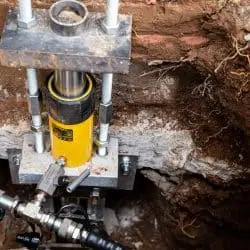
- Minor Settlement (4 to 6 piers): $6,000 – $12,000
- Moderate Settlement (7 to 12 piers): $10,500 – $24,000
- Severe Settlement / Wraparound Underpinning (13+ piers): $25,000 – $40,000+
Delaying repairs often increases overall expenses. Unaddressed settlement leads to cosmetic damage, broken plumbing lines, and structural roof framing issues that escalate restoration costs over time.
Push Piers vs. Helical Piers: Technical Differences & Cost Drivers
Contractors primarily use two engineered piering systems to anchor homes to load-bearing strata. The right choice depends on your home’s weight, structural design, and depth to bedrock.
1. Hydraulically Driven Push Piers
Push piers consist of high-strength steel tubes driven deep into the ground using hydraulic jacks that use the weight of the home as resistance. They are driven until they reach solid bedrock or competent load-bearing strata.
- Best For: Heavy residential structures, multi-story homes, and brick veneer exteriors.
- Average Cost Per Pier: $1,800 – $3,200
2. Screw-In Helical Piers
Helical piers feature helical flighting plates welded to a central shaft. They are mechanically screwed into the soil like a corkscrew until reaching predetermined torque specifications.
- Best For: Lighter structures, porches, chimneys, deck foundations, or areas with shallow bedrock.
- Average Cost Per Pier: $1,500 – $2,800
Piering System Comparison
| Feature / Factor | Push Piers (Bedrock Driven) | Helical Piers (Torque Driven) |
|---|---|---|
| Primary Mechanism | Hydraulic force driven to refusal/bedrock | Screwed into soil until torque spec is met |
| Best Application | Heavy homes, brick veneer, deep bedrock | Light structures, additions, shallow bedrock |
| Average Cost Per Pier | $1,800 – $3,200 | $1,500 – $2,800 |
4 Key Factors That Impact Your Repair Estimate
- Depth to Solid Strata: Bowling Green’s karst geology varies widely. Deeper bedrock requires additional steel pier extensions, increasing material costs.
- Number of Pier Points: A structural engineer or foundation specialist calculates pier placement based on building weight distribution and settlement severity.
- Site Accessibility & Excavation: Piering locations beneath porches, decks, or near tight utility lines may require hand digging, adding labor hours.
- Cosmetic & Masonry Restoration: After stabilization, tuckpointing cracked brickwork or restoring concrete walkways will add to the overall project scope.
Frequently Asked Questions
How do I know if my home needs foundation piers instead of minor crack repair?
If wall cracks exceed 1/4 inch in width, follow stair-step patterns across exterior brick, or coincide with sticking doors and sloping floors, your home is experiencing structural settlement that requires engineered underpinning rather than cosmetic surface patching.
Can piering lift my home back to its original position?
In many instances, hydraulic piering allows specialists to lift the foundation back toward its original level position ("maximum practical recovery"). However, the main goal of piering is permanent stabilization to stop future downward movement.
How long does foundation piering installation take?
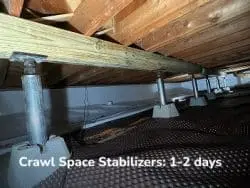
Most standard residential piering projects take between 1 to 3 days to complete, depending on site access and the total number of piers installed.